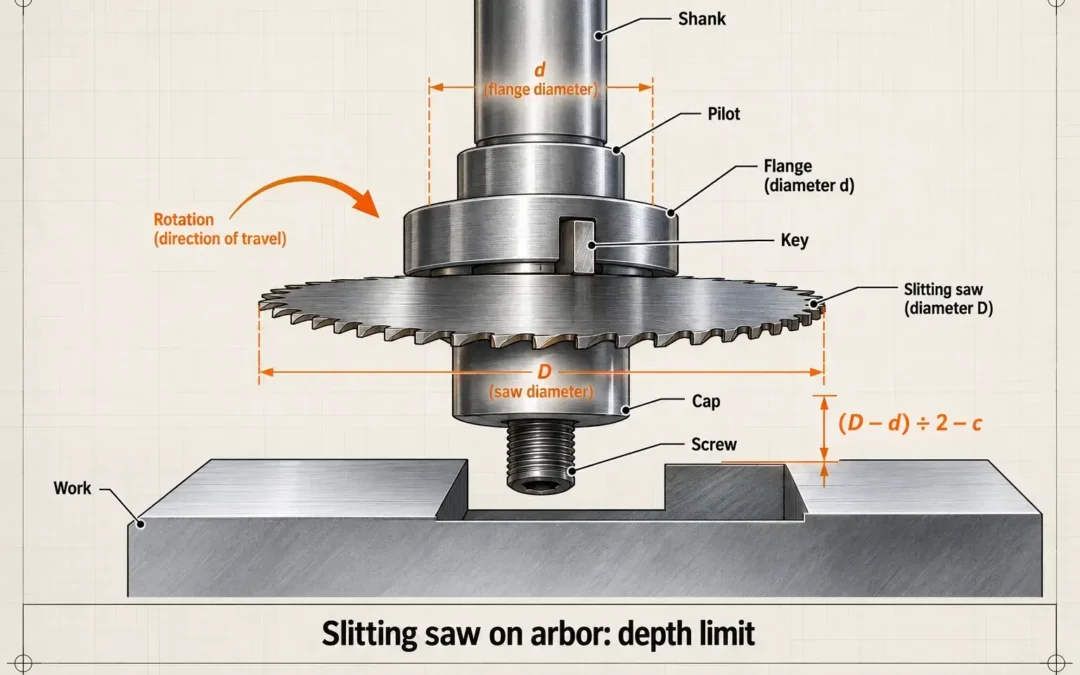
By Shivin Gupta, General Manager, Maxwell Slitter Industries A slitting saw arbor is the short shaft that carries a slitting saw on the spindle, with the saw clamped between a flange and a cap. Choose it by your spindle: R8, Morse taper, CAT40, BT40, or a straight...
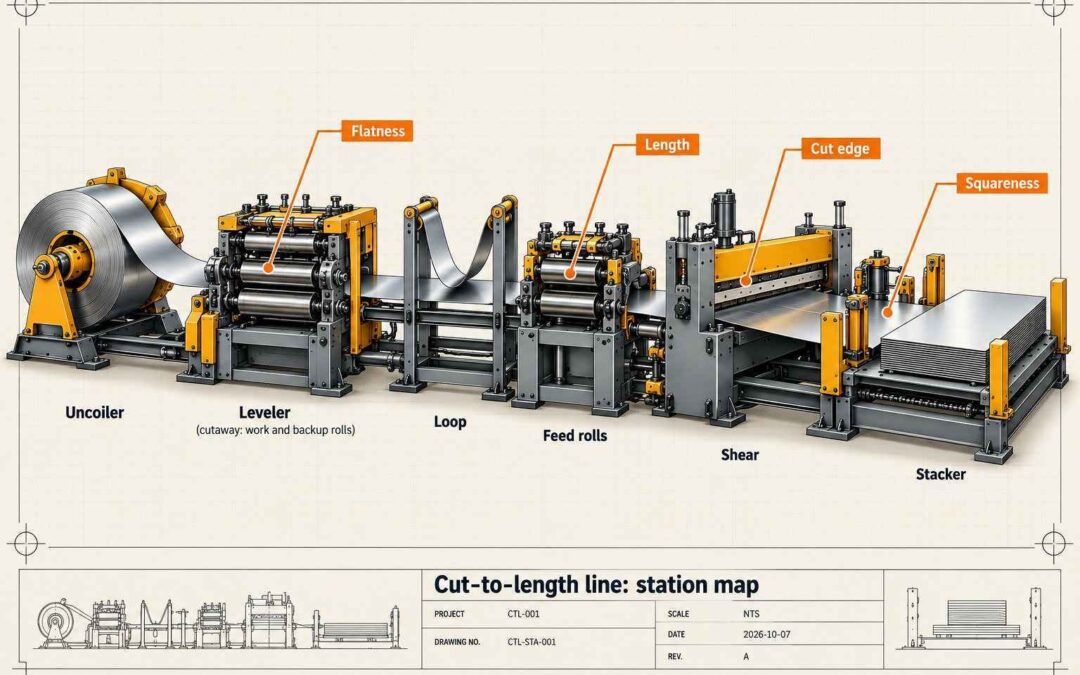
A cut-to-length (CTL) line turns a coil of flat-rolled steel or aluminum into flat sheets or blanks of a set length. The strip is unwound, flattened in a straightener or leveler, measured, sheared and stacked, often by one or two operators working from a console. When...
Slit width accuracy depends on more than knife sharpness or line speed. The spacers positioned between each knife pair set the exact horizontal distance the strip gets cut to, and any deviation in their thickness carries straight through into the finished dimension....
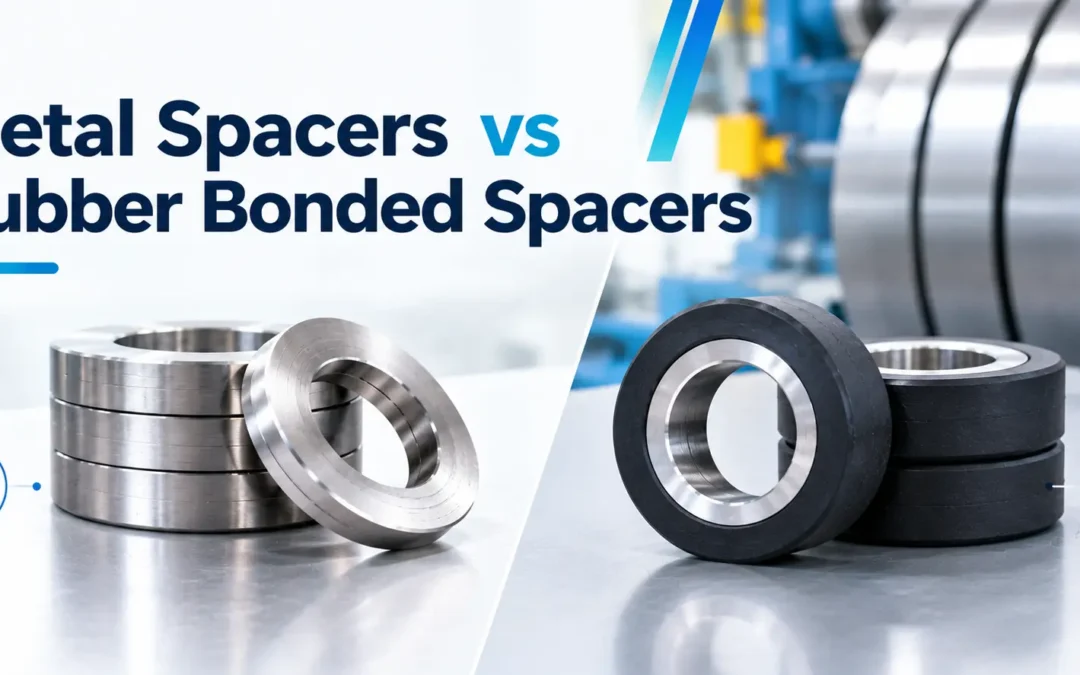
You’re setting up an arbor for a new slit pattern. The knives are ready, and the clearances are calculated. But the spacer stack is where a lot of operators pause and ask the same question: metal or rubber bonded? Both sit on the same arbor. Both look similar...
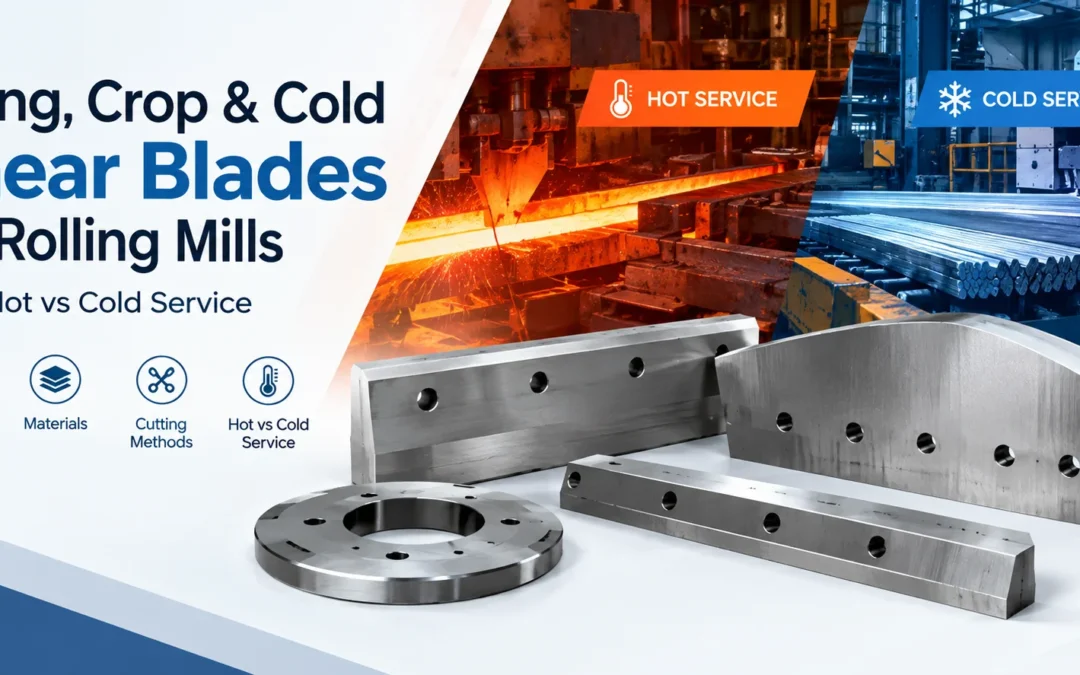
Rolling mill shear blades (shear knives, in much of the US and Europe) fall into two families, and the split follows the temperature of the steel at the cut. Blades on the crop, dividing and other flying shears in the hot line cut stock that can be above 1,000°C, and...
A slitting order that reads “12 cuts at 100 mm from a 1200 mm coil, 0.8 mm cold rolled” is not a specification. It is a starting point. Four further numbers decide whether the coils you receive feed your press or sit in the rack waiting for a credit note:...