Ask five slitting shops how many times a rotary knife can be reground and you will get five numbers, all of them confidently stated and none of them transferable. The heaviest gauge that knife is asked to cut sets the count, not the knife itself. Send two identical 20...
Get horizontal clearance wrong, and the line tells you inside one coil: burr on the strip edge, camber that only shows up at the recoiler, edge wave, knife marks, and tooling that dulls in a shift instead of a fortnight. It is also the setting most often blamed on the...
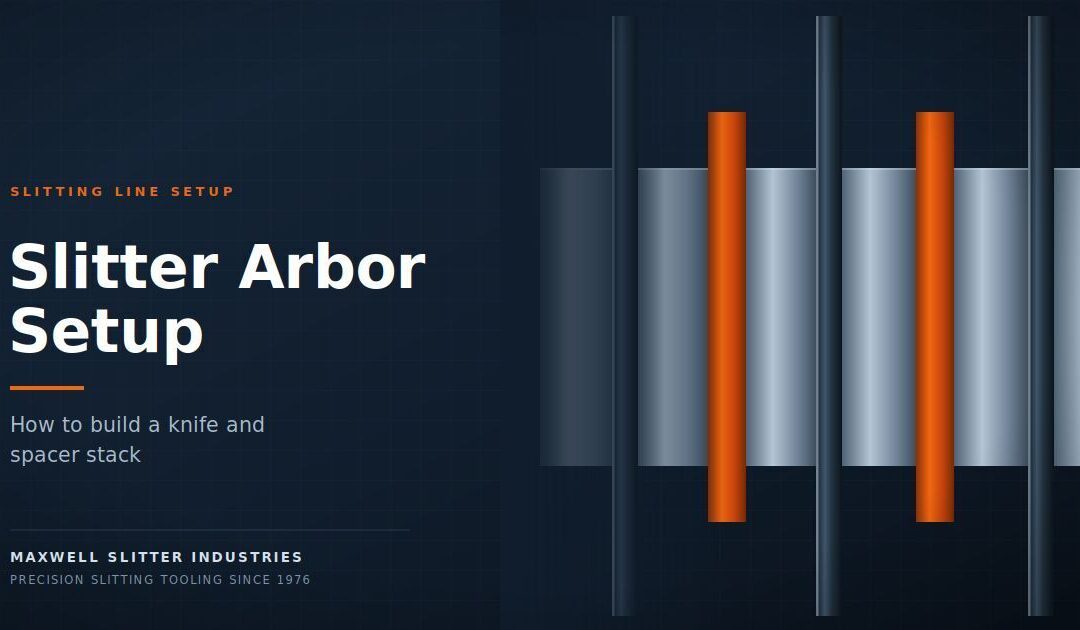
A slitter arbor is the rotating shaft that carries the knives, spacers, and stripper rings that produce each cut on a slitting line. Building the stack correctly is what determines finished strip width, and on most lines it is also the single largest consumer of...
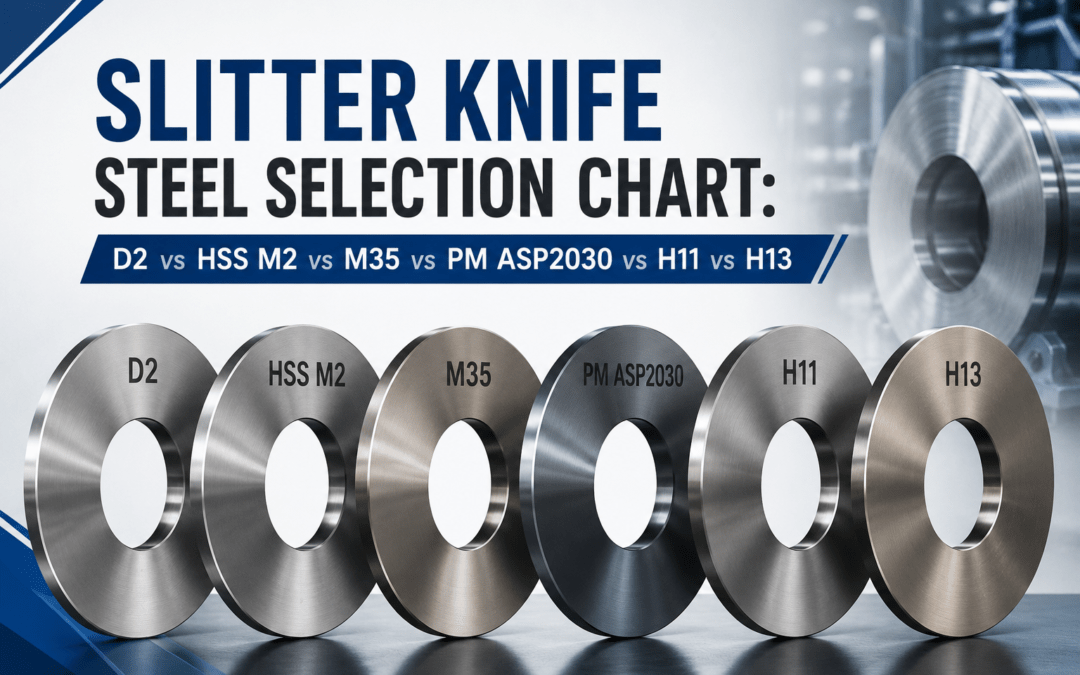
Choosing the right slitter knife grade material affects edge quality and maintenance costs. The best steel depends on the material you cut and operating conditions. A steel grade that performs well in paper converting may not be the right choice for stainless steel or...
The line is running. The web is tracking straight, tension is stable, and the operator has just changed over to a new slit pattern. Ten minutes in, the edges start shedding. Fine dust collects on the idler rolls. One strip is winding with a slightly ragged edge that...
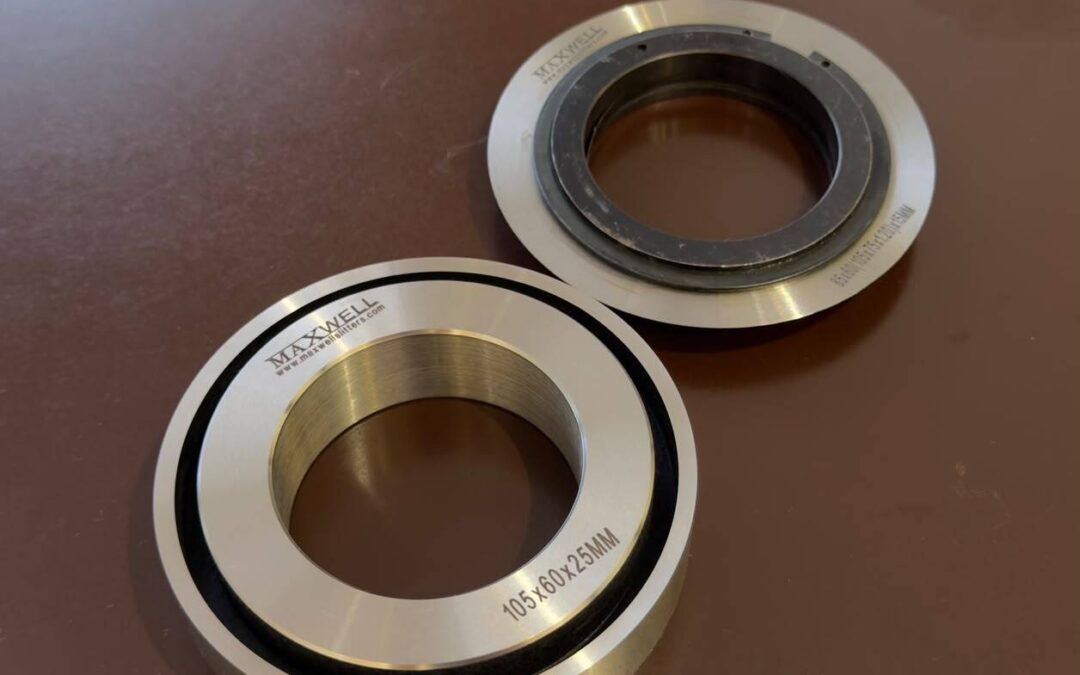
Maxwell Slitter Industries | Precision manufactured since 1976 | ISO 9001:2015 Grinding shapes a slitter knife. Lapping finishes it. They are two different jobs, and the difference is the reason a knife slits a clean, burr-free edge at line speed instead of tearing,...