
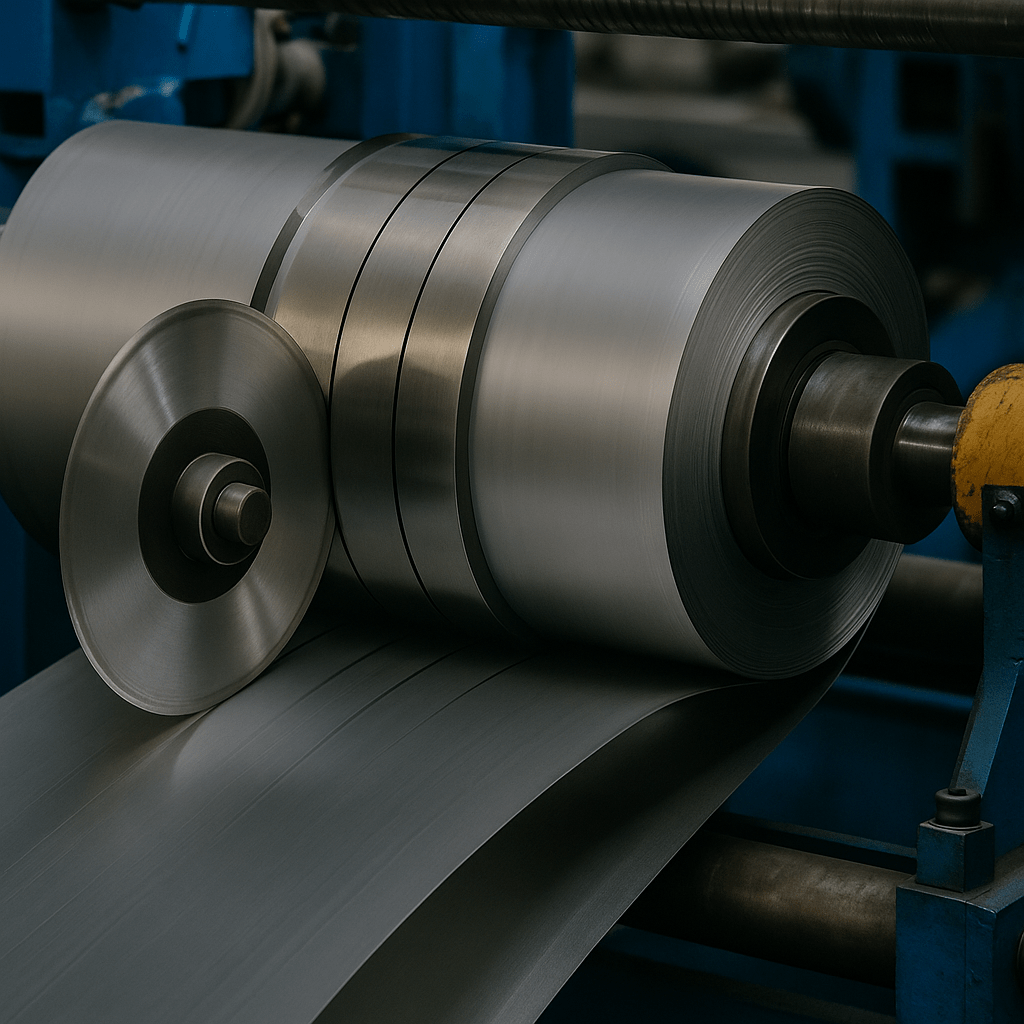
What Is a Slitter Blade?
In high-speed converting operations, even a small cutting inconsistency can lead to torn edges, wasted material, product defects, machine downtime, and higher production costs. That’s why choosing the right slitter blade is critical for manufacturers working with films, foils, paper, plastics, textiles, laminates, and flexible packaging materials.
A slitter blade is a precision industrial cutting tool designed to slit large rolls or sheets of material into narrower widths with clean edges and tight tolerances. Also known as slitter knives, industrial slitter blades, or slitting blades, these tools are widely used across the converting, packaging, printing, plastics, and metal processing industries.
From film slitting blades used in flexible packaging to carbide slitter blades designed for abrasive materials, the right blade directly impacts cut quality, machine efficiency, material waste, and production speed.
This guide explains:
- What is a slitter
- Different types of slitter blades
- Blade materials and edge profiles
- Slitting methods
- Best applications for each blade type
- How to choose the right industrial slitter knives
- Why manufacturers rely on Maxwell Slitters
Quick Definition: What Is a Slitter?
A slitter is an industrial machine used to cut large rolls or sheets of material into narrower strips using precision slitting blades or slitter knives. Slitters are commonly used in paper converting, flexible packaging, foil processing, plastics manufacturing, and textile industries.
Slitter Blade vs. Slitter Knife: Is There a Difference?
The terms slitter blade, slitter knife, and industrial slitter knives are often used interchangeably. However, in industrial environments:
- “Slitter blade” usually refers to circular or rotary cutting tools
- “Slitter knife” may refer to straight, circular, razor, or custom cutting knives
- Both are used in slitting and converting operations
Why Slitter Blades Matter in Manufacturing
The performance of a slitting operation depends heavily on blade precision. Poor-quality slit blades can cause:
- Burr formation
- Frayed edges
- Dust generation
- Film stretching
- Heat buildup
- Material tearing
- Increased downtime
- Faster blade wear
High-quality precision slitting blades improve:
- Edge accuracy
- Roll consistency
- Production efficiency
- Machine uptime
- Material utilization
- Product quality
For manufacturers running high-speed converting lines, blade quality directly impacts profitability.
Common Industries That Use Industrial Slitter Blades
Industrial slitter blades are essential across many manufacturing sectors.
| Industry | Materials Slit | Recommended Blade Type |
|---|---|---|
| Flexible Packaging | Films, laminates | Razor slitting blades |
| Paper Converting | Kraft paper, label stock | Rotary slitter blades |
| Foil Processing | Aluminum, copper foil | Carbide slitter blades |
| Plastics | PET, PVC, BOPP | Shear slitting blades |
| Textile Industry | Nonwoven fabrics | Circular slitter knives |
| Electronics | Conductive films | Precision carbide blades |
| Rubber Processing | Rubber sheets | Industrial cutting blades |
Types of Slitter Blades
Different slitting applications require different blade geometries, edge profiles, and cutting methods.
1. Razor Slitting Blades
Best For:
- Thin films
- Plastic wraps
- Flexible packaging
- Lightweight materials
Razor slitting uses extremely sharp blades positioned against the material web. This method creates clean cuts with minimal pressure.
Benefits:
- High-speed cutting
- Low material distortion
- Minimal waste
- Excellent edge quality
Common Applications:
- Polyethylene films
- Stretch wrap
- Adhesive tapes
- Packaging films
2. Shear Slitting Blades
Best For:
- Thick materials
- Paper rolls
- Laminates
- Metal foils
Shear slitting blades work like scissors, using a top and bottom knife arrangement.
Benefits:
- Precise edge control
- Smooth finishes
- Reduced burr formation
- Excellent for tight tolerances
Common Applications:
- Paper converting
- Foil slitting
- Heavy films
- Industrial laminates
3. Score Slitting Blades
Best For:
- Nonwoven materials
- Foam
- Lightweight paper
Score slitting involves pressing a circular blade against a hardened roll.
Benefits:
- Simple setup
- Lower operational cost
- Effective for softer materials
Common Applications:
- Tissue paper
- Foam products
- Nonwoven textiles
4. Rotary Slitter Blades
Best For:
- Continuous high-speed operations
- Automated converting lines
Rotary slitter blades are circular blades designed for consistent high-volume cutting.
Benefits:
- High durability
- Continuous operation
- Excellent production efficiency
Slitter Blade Materials Explained
The material of the slitting blade determines:
- Wear resistance
- Edge retention
- Heat tolerance
- Corrosion resistance
- Blade lifespan
Choosing the correct slitter knife materials is essential for maintaining production quality.
D2 Tool Steel Slitter Blades
Best For:
- Abrasive materials
- Plastics
- Laminated papers
D2 steel offers:
- High wear resistance
- Long blade life
- Good hardness
- Cost-effective performance
Recommended Applications:
- Plastic film conversion
- Packaging materials
- Label stock
M2 High-Speed Steel Slitter Knives
Best For:
- High-speed production lines
- Heat-intensive applications
M2 steel performs exceptionally well under elevated temperatures.
Advantages:
- Excellent toughness
- Heat resistance
- Longer cutting cycles
Recommended Applications:
- High-speed web slitting
- Industrial converting operations
Carbide Slitter Blades
Best For:
- Abrasive substrates
- Foils
- High-precision applications
Carbide slitter blades provide superior hardness and wear resistance compared to traditional tool steels.
Benefits:
- Exceptional edge retention
- Reduced blade replacement frequency
- Better dimensional accuracy
- Ideal for demanding materials
Common Applications:
- Foil slitting blades
- Conductive films
- Aluminum processing
- Copper foil cutting
Comparison: D2 vs M2 vs Carbide Slitter Blades
| Feature | D2 Steel | M2 Steel | Carbide |
|---|---|---|---|
| Wear Resistance | High | Moderate | Very High |
| Heat Resistance | Moderate | High | Very High |
| Edge Retention | Good | Good | Excellent |
| Cost | Moderate | Moderate | Higher |
| Best For | Abrasive materials | High-speed operations | Precision applications |
Understanding Slitter Blade Edge Profiles
The edge profile of a slitting blade significantly affects:
- Cut quality
- Material deformation
- Dust generation
- Blade durability
Common Edge Profiles
Single Bevel
Best for directional cuts and lightweight materials.
Double Bevel
Provides balanced cutting and better stability.
Serrated Edge
Ideal for fibrous or difficult materials.
Radius Edge
Improves chip resistance and blade longevity.
Why Blade Concentricity Matters
Blade concentricity measures how accurately the cutting edge aligns with the blade’s rotational center.
Poor concentricity can cause:
- Vibration
- Uneven cuts
- Premature wear
- Material waste
High-precision industrial slitter knives are manufactured with tight concentricity tolerances to maintain smooth and stable operation.
Common Slitting Problems and Their Causes
| Problem | Possible Cause |
| Frayed edges | Dull slitter blade |
| Burr formation | Incorrect blade geometry |
| Material tearing | Poor blade alignment |
| Dust generation | Improper cutting angle |
| Uneven cuts | Low blade concentricity |
| Excess downtime | Low-quality blade material |
How to Choose the Right Slitter Blade
Selecting the right slit blade depends on several operational factors.
Consider These Factors:
1. Material Type
Different substrates require different blade hardness and geometries.
2. Material Thickness
Thicker materials often require shear slitting blades.
3. Production Speed
High-speed lines benefit from M2 or carbide slitter knives.
4. Precision Requirements
Tight tolerances require precision-ground blades.
5. Abrasion Levels
Abrasive materials require carbide slitter blades.
Expert Recommendation
Best Blade Choices by Application
For Flexible Packaging
Recommended: Razor slitting blades
For Foil Processing
Recommended: Carbide slitter blades
For Paper Converting
Recommended: Shear slitting blades
For High-Speed Operations
Recommended: M2 industrial slitter blades
For Abrasive Plastics
Recommended: D2 slitter knives
Stock vs. Custom Slitter Blades
Manufacturers often choose between stock and custom slitting blades.
| Feature | Stock Blades | Custom Slitter Blades |
| Lead Time | Faster | Longer |
| Cost | Lower | Higher |
| Precision | Standard | Application-specific |
| Blade Life | Moderate | Extended |
| Machine Compatibility | General | Exact fit |
When Custom Slitter Blades Make Sense
Custom industrial slitter blades are ideal when:
- Tight tolerances are required
- Materials are difficult to cut
- Machines run at high speeds
- Downtime costs are high
- Standard blades wear out quickly
Custom-engineered slitter knives can dramatically improve operational efficiency and reduce long-term costs.
Slitter Blade Maintenance Tips
Proper maintenance extends blade life and maintains cutting performance.
Best Practices:
- Inspect blades regularly
- Clean after use
- Store in dry environments
- Avoid improper handling
- Schedule routine sharpening
- Monitor blade wear patterns
Slitter Blade Sharpening: Why It Matters
Professional slitter blade sharpening restores:
- Cutting precision
- Edge consistency
- Production quality
Regular sharpening reduces:
- Material waste
- Machine strain
- Blade replacement frequency
What Are Slitter and Face Cutting Lines?
Definition Section
Slitter and face cutting lines are industrial systems designed to slit materials into precise widths while simultaneously cutting or finishing the material surface.
These systems are widely used in:
- Packaging
- Film converting
- Laminates
- Flexible materials processing
They help manufacturers improve throughput while maintaining dimensional accuracy.
Why Businesses Choose Maxwell Slitters
Maxwell Slitters delivers high-performance slitting solutions engineered for precision, durability, and long-term operational efficiency.
What Sets Maxwell Slitters Apart
Precision Manufacturing
Every slitter blade is engineered for consistent cutting accuracy and tight tolerances.
Custom Blade Solutions
Maxwell provides custom industrial slitter knives tailored to:
- Machine speed
- Material type
- Production requirements
- Application tolerances
Advanced Materials
From D2 steel to carbide slitter blades, Maxwell manufactures blades designed for demanding industrial environments.
Industry Expertise
With extensive experience across converting industries, Maxwell understands the operational challenges manufacturers face daily.
Reduced Downtime
High-quality blade engineering helps reduce:
- Frequent replacements
- Machine stoppages
- Material waste
Reliable Performance
Maxwell slitter blades are designed for:
- Long cutting cycles
- Stable performance
- Cleaner edges
- Higher productivity
Where to Buy Slitter Blades
If you are searching for where to buy slitter blades, it’s important to choose a manufacturer that offers:
- Precision engineering
- Material expertise
- Custom fabrication
- Tight tolerances
- Fast turnaround times
- Application-specific recommendations
Maxwell Slitters Official Website provides industrial slitter blades, slitter knives, and custom converting solutions for a wide range of industries.
Final Thoughts
Industrial slitter blades play a critical role in modern converting and manufacturing operations. Whether you need film slitting blades, carbide slitter knives, rotary slitter blades, or custom-engineered industrial cutting blades, selecting the right solution directly impacts efficiency, product quality, and operational costs.
Understanding:
- slitting methods
- blade materials
- edge geometries
- machine compatibility
- substrate requirements
helps businesses optimize production while minimizing downtime and waste.
For manufacturers seeking reliable, high-performance slitting solutions, Maxwell Slitters offers the expertise, customization, and precision required for demanding industrial applications.
Frequently asked questions
A slitter blade is used to cut large rolls or sheets of material into narrower strips with precision and minimal waste.
Industries including packaging, paper converting, plastics, textiles, foil processing, electronics, and printing use slitter blades.
Razor slitting uses sharp blades for lightweight materials, while shear slitting uses paired blades for thicker materials and tighter tolerances.
Carbide slitter blades are best for abrasive materials, foil processing, and high-precision industrial applications.
Blade lifespan depends on material type, operating speed, substrate abrasiveness, and maintenance practices.
Yes. Professional slitter blade sharpening restores edge quality and extends blade life.
Choose based on material type, production speed, tolerance requirements, blade geometry, and machine specifications.
You can buy precision industrial slitter blades and custom slitter knives from Maxwell Slitters.