
PRECISION MANUFACTURED SINCE 1976 | ISO 9001:2015
Rotary Slitter Blades & Slitter Knives
Precision slitter knives for aluminium, stainless steel, paper, film, and converting industries.
D2, HSS M2, HSS M35 and powder-metal blades, vacuum heat-treated to 60 to 66 HRC, CNC-ground to ±0.0015 mm thickness tolerance and 0.2 Ra surface finish. Custom manufactured to drawing or sample. Shipped to 30+ countries. 4-week standard lead time
▶ 50 Years in Slitting Tools (Est. 1976)
▶ ±0.0015 mm Tolerance, 0.2 Ra Finish
▶ 4 Week Lead, 2 Week Rush Available
▶ ISO 9001:2015 Certified
1976
MANUFACTURING SINCE
BLADES PRODUCED ANNUALLY
30+
COUNTRIES SHIPPED TO
ISO 9001
QUALITY CERTIFIED
Circular Slitting Blades for Precision Coil Cutting
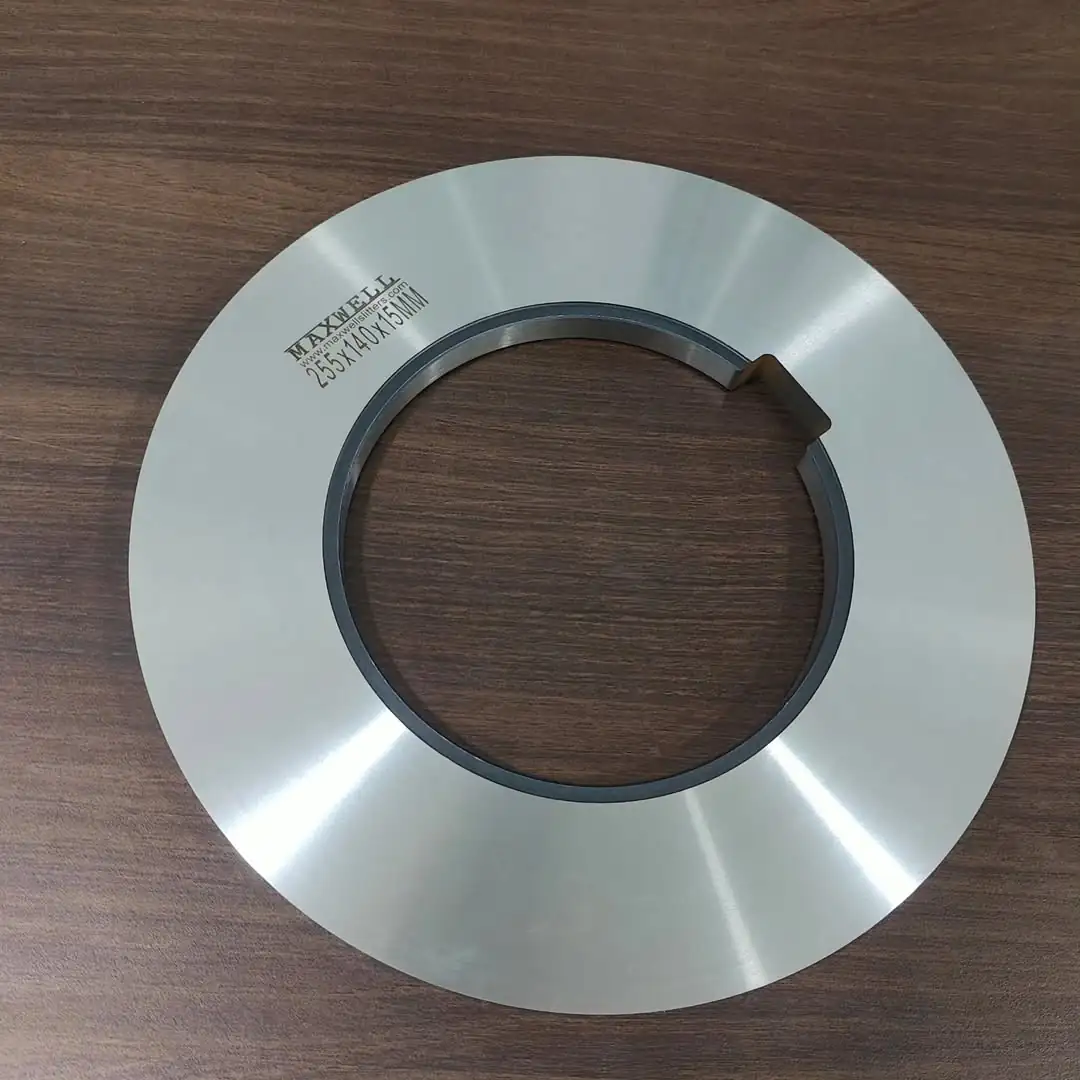
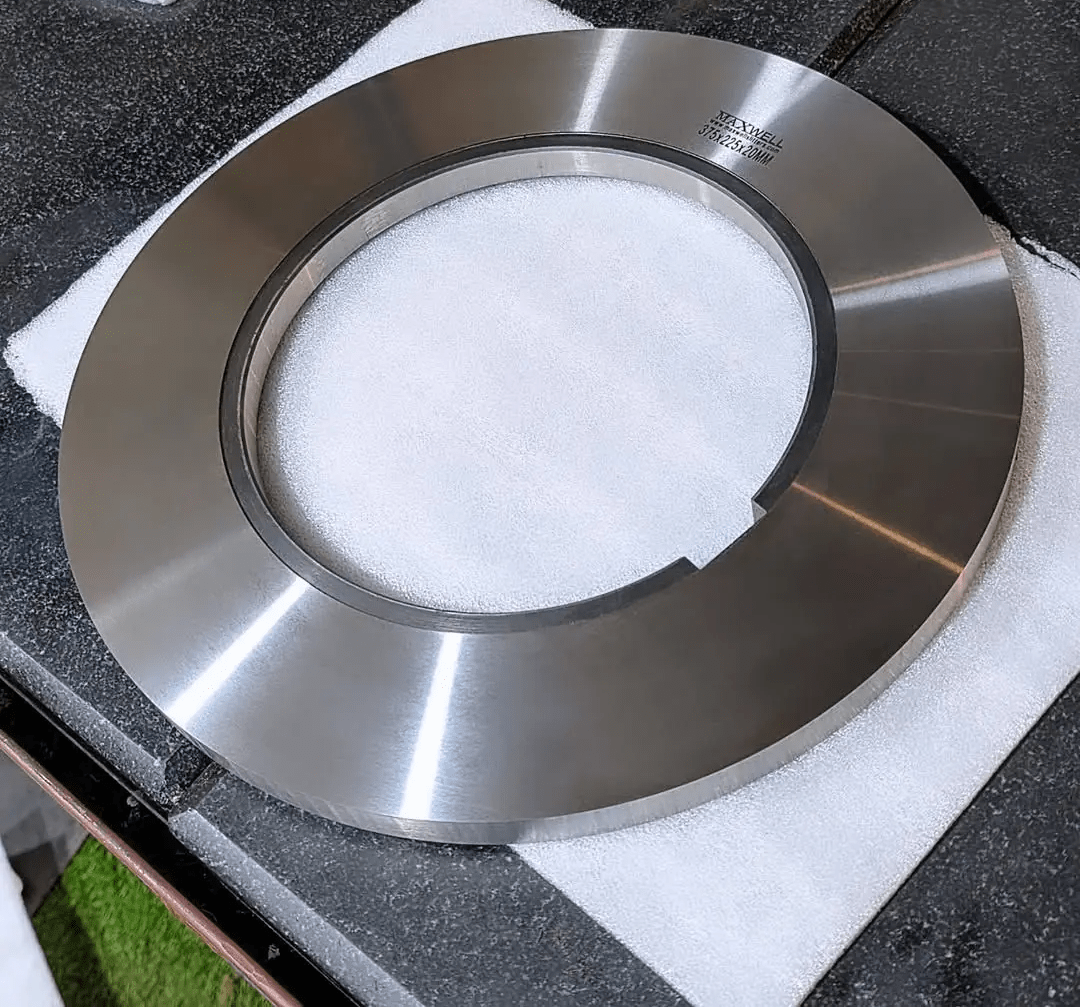
At Maxwell, we manufacture precision rotary slitter blades and slitter knives for coil cutting, sheet metal processing, and high-speed slitting lines across steel, aluminium, stainless, copper, and electrical steel applications.
Every blade is made in-house at our Rajpura facility, from raw material selection through vacuum heat treatment and CNC precision grinding, with no sub-contracting at any stage. Our in-house vacuum hardening furnace ensures uniform HRC across every blade cross-section, eliminating the soft-spot failures that cause premature chipping and burr on coil slitting lines.
Technical Specifications, No Guesswork, No Ambiguity
Every specification below is verified per blade by our quality team before dispatch. Material test certificates and dimensional inspection reports are included with every shipment at no extra cost.
Material Selection Guide, Which Grade for Your Application
| Grade | HRC | Best Application | Max Strip Thk | Edge Life | Lead Time |
|---|---|---|---|---|---|
| D2 | 60 to 62 | HR/CR/GI coil slitting, general purpose | 6 mm | 1.0x (baseline) | 4 wks |
| HSS M2 | 62 to 64 | Stainless steel, silicon steel, high-speed lines | 4 mm | 1.5x | 4 wks |
| HSS M35 | 63 to 65 | Hardened SS & CRGO electrical steel | 3 mm | 1.8x | 5 wks |
| H11/H13 | 50 to 55 | Hot rolled coil, side trimming | 12 mm | 0.8x at high temp | 4 wks |
| PM ASP2030 | 64 to 66 | Premium long life critical applications | 4 mm | 2.5x | 6 wks |
Dimensional & Tolerance Specifications
| Outer Diameter Range | 75 mm to 600 mm (2.95 in to 23.62 in) |
| Inner Diameter Range | 20 mm to 250 mm (0.79 in to 9.84 in) |
| Thickness Range | 1.0 mm to 25 mm (0.04 in to 0.98 in) |
| Thickness Tolerance | ±0.0015 mm (±0.000059 inch) |
| Flatness Tolerance | ±0.001 mm (±0.000039 inch) |
| Parallelism | Within 0.005 mm TIR |
| Concentricity / Runout | Within 0.005 mm TIR |
| Surface Finish | Lapped to 0.2 Ra µm, polished to 0.1 Ra on request |
| Edge Geometry | Single bevel, double bevel, dished (concave/convex), radius edge |
| Cutting Capacity | 0.1 mm to 24 mm material thickness |
| Heat Treatment | In house vacuum hardening & multi-stage tempering |
| Hardness Verification | 100% inspected per blade, Equotip portable hardness tester |
| CMM Inspection | Renishaw CMM, dimensional certificate per batch |
| Marking | Laser etched part no., batch number & date on every blade |
How to Specify Your Slitter Blade in 5 Steps
1
Material & Thickness
State material to be slit and thickness range (e.g. CR steel, 0.4 to 1.6 mm).
2
Strip Width & Tolerance
Specify required slit width and acceptable edge tolerance.
3
Arbor Dimensions
Provide existing arbor OD, ID, thickness, and keyway details if any.
4
Line Speed & Volume
Line speed in m/min and number of cuts per shift, if known.
5
Current Failure Mode
Current blade brand/grade and what failure to eliminate: chipping, burr, edge wear, dishing.
Send a drawing, DXF, or used sample to [email protected]. We respond within 1 working day with a grade recommendation, price, and delivery date.
Applications, Select Your Material & Configuration
Not all materials cut alike. Each card below is a real application Maxwell serves, with the recommended grade, hardness, and edge geometry drawn from production data, not a catalogue. Click “Quote this configuration” to pre fill the RFQ form.
HR Coil Slitting, Mild & Structural Steel, 1.0 to 6.0 mm
Grade: D2 or H11
Hardness: 58 to 62
HRC Edge: Single bevel 5 to 8°
Typical: 300 x 150 x 20 mm
Watch for edge wear at high gauge. Choose H11 for hot rolled where scale abrasion is severe.
CR Coil Slitting, Low Carbon Steel, 0.3 to 3.0 mm
Grade: D2 or D3
Hardness: 60 to 62
HRC Edge: Single bevel 6 to 8° + land
Typical: 255 x 140 x 15 mm
Burr is the primary failure mode on CR strip. Tight flatness tolerance is critical at thin gauges.
GI / GA Coated Coil Slitting, 0.3 to 2.0 mm
Grade: D2 (TiN coated)
Hardness: 60 to 62
HRC Edge: Radius edge or single bevel
Typical: 255 x 140 x 15 mm
Zinc coating causes accelerated blade wear. TiN surface treatment extends life 40 to 60%.
Stainless Steel Coil, 200 / 300 / 400 Series
Grade: HSS M2 or M35
Hardness: 62 to 65
HRC Edge: Single bevel 6° narrow land
Typical: 255 x 140 x 20 mm
Watch for edge wear at high gauge. Choose H11 for hot rolled where scale abrasion is severe.
Aluminium & Aluminium Alloy Coil Slitting
Grade: D2 or HSS M2
Hardness: 58 to 62
HRC Edge: Dished (concave) top blade
Typical: 280 x 160 x 18 mm
Soft material. Blade geometry drives edge quality more than hardness here.
Silicon Steel / CRGO Electrical Steel Slitting
Grade: HSS M35 or PM ASP2030
Hardness: 63 to 66
HRC Edge: Single bevel 5 to 7° narrow land
Typical: 255 x 140 x 15 mm
Extremely abrasive. Powder metal gives 2x to 3x life vs standard HSS. Mandatory for CRGO.
Copper & Brass Strip Slitting
Grade: D2 or D3
Hardness: 60 to 62
HRC Edge: Double bevel or radius edge
Typical: 200 x 100 x 12 mm
Ductile metals can smear. Sharp geometry and correct lateral clearance are essential.
Tube Mill Side Trimming
Grade: D2 or HSS M2
Hardness: 60 to 64
HRC Edge: Square edge / side trim
Typical: 300 x 180 x 20 mm
Continuous contact demands maximum wear resistance. Pair with matched hardened spacers.
Cut to Length Line Shear Blades
Grade: D2 or H13
Hardness: 58 to 62
HRC Edge: Straight edge / shear angle
Typical: Custom to OEM spec
Shear angle and blade gap are critical. Always supply matched upper and lower blade sets.
Our Manufacturing Process, From Blank to Blade
Every Maxwell slitter blade passes through 6 tightly controlled in-house manufacturing stages. No sub-contracting at any step. Our facility in Rajpura, Punjab runs CNC turning, CNC bore grinding, wire EDM for keyways, in-house vacuum hardening, and CMM quality verification.
1
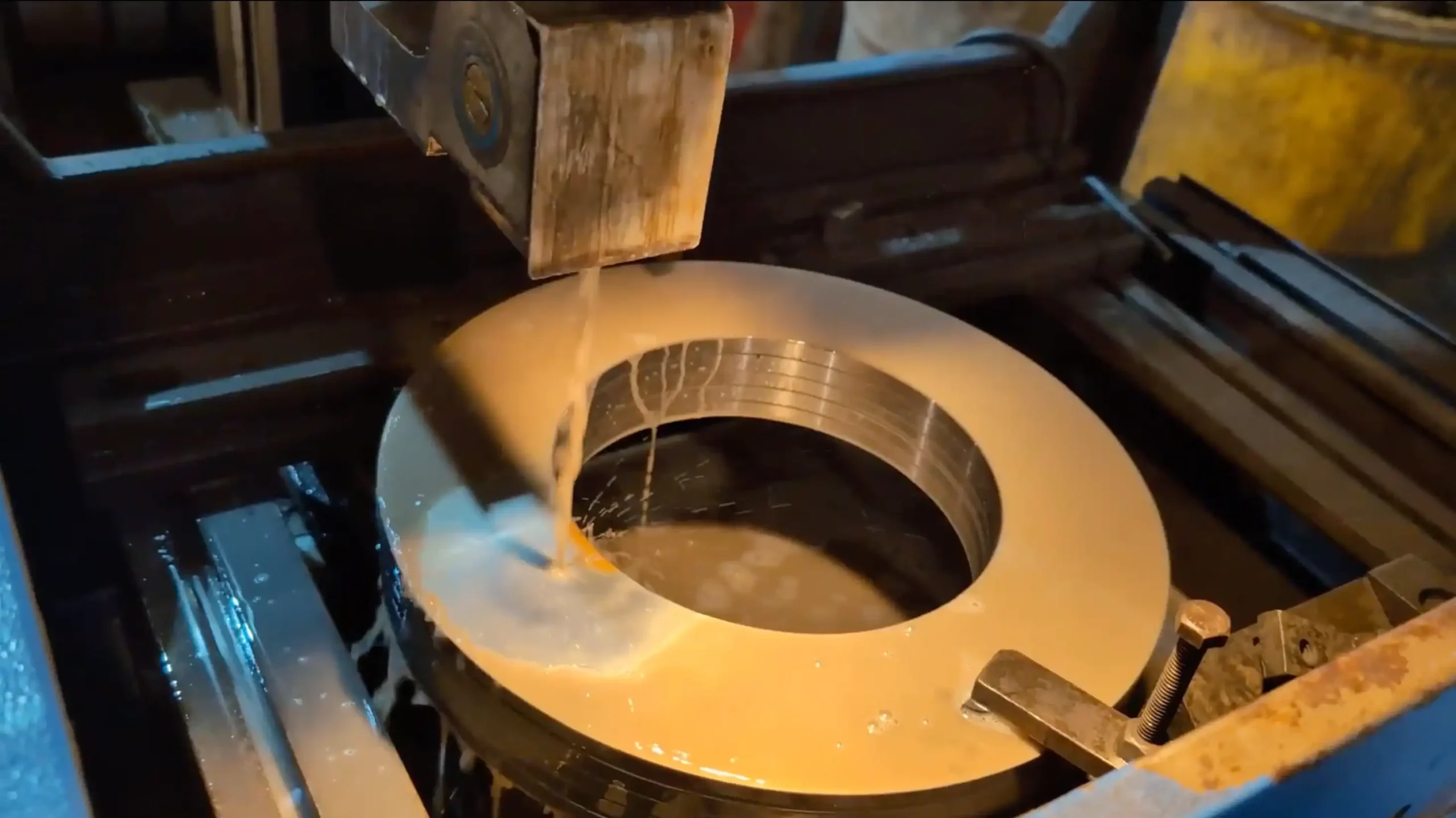
Raw Material Cut
ITM-5 bandsaw cuts imported D2/HSS billets. Mill certs retained per heat.
2
CNC Turning
FANUC CNC lathe faces & turns blanks to near net OD, ID & thickness.
3
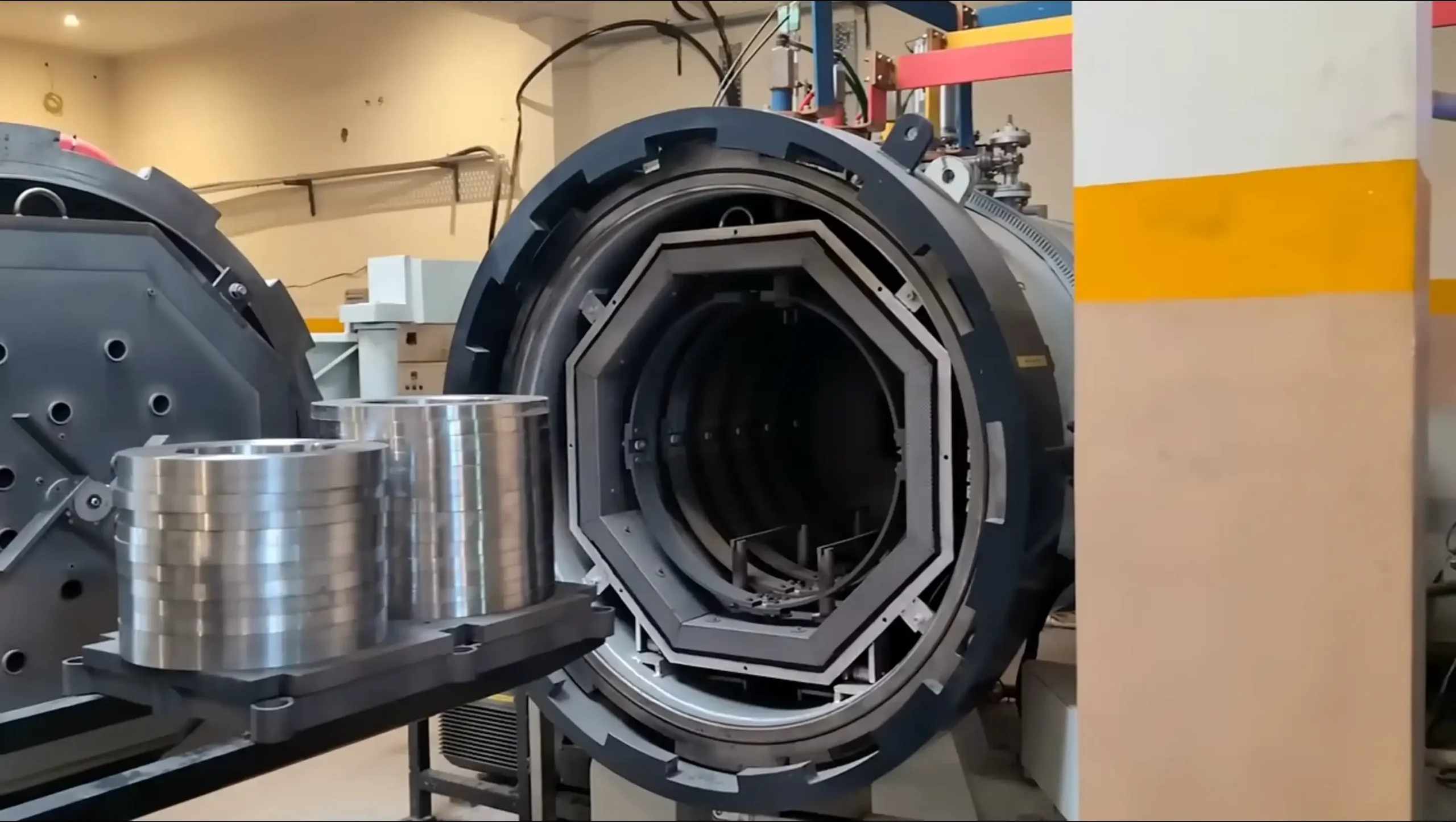
Vacuum Hardening
In house vacuum furnace, multi-stage hardening & tempering to specified HRC.
4
Bore Grinding
Doimak CNC internal grinder. Bore ground to final ID tolerance ±0.0015 mm.
5
Keyway Wire EDM
Wire EDM machines keyways to precise width & depth, no distortion.
6
Laser Marking
Part no., dimensions & batch date laser etched on every blade.
Inside Our Rajpura Manufacturing Facility
Real photographs of our shop floor. No CGI, no stock images. Each step shown is the actual machinery, in operation, producing the same blade you order.
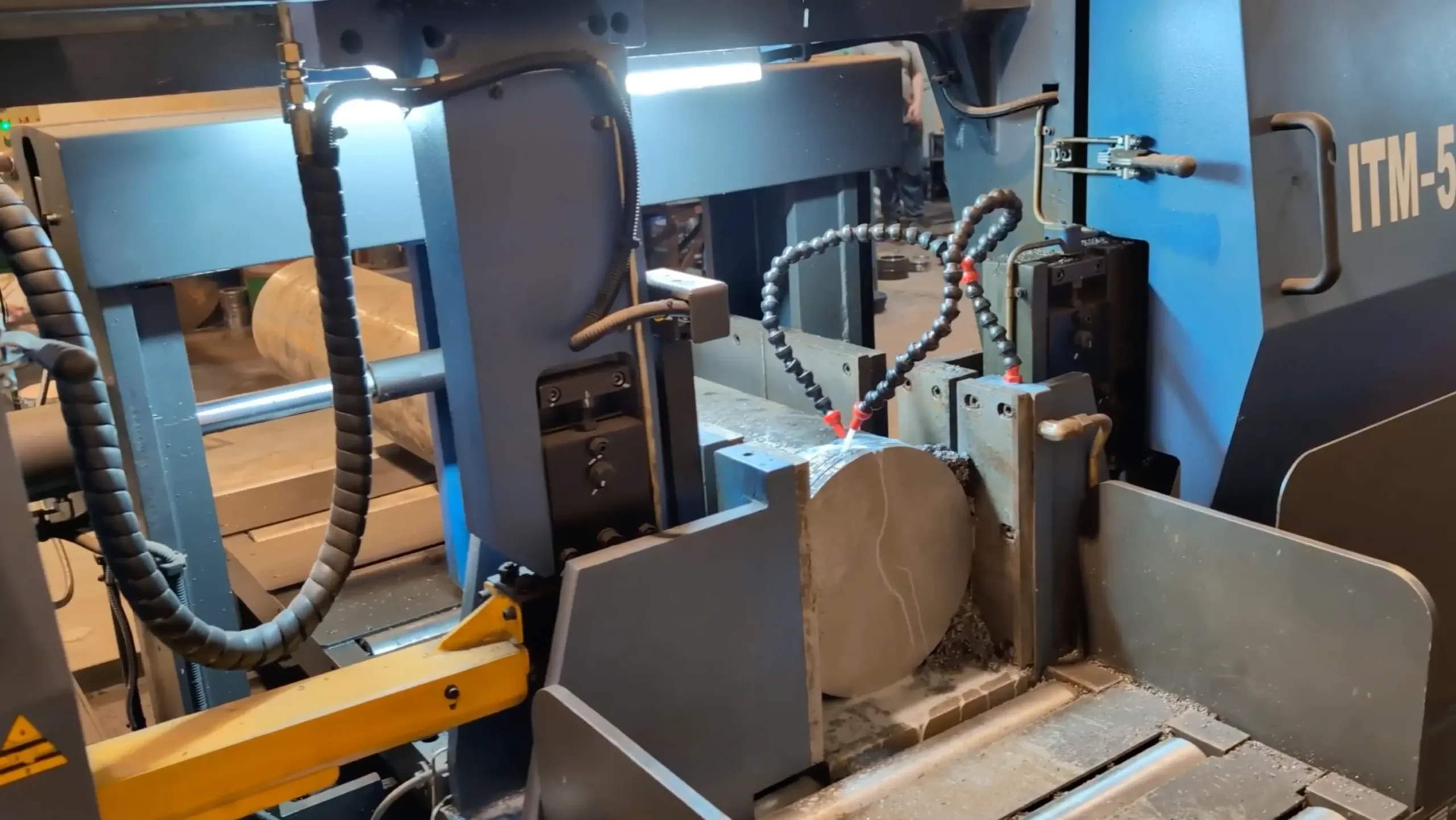
STEP 01
Raw Material Cutting
ITM-5 Bandsaw, D2 / HSS billets
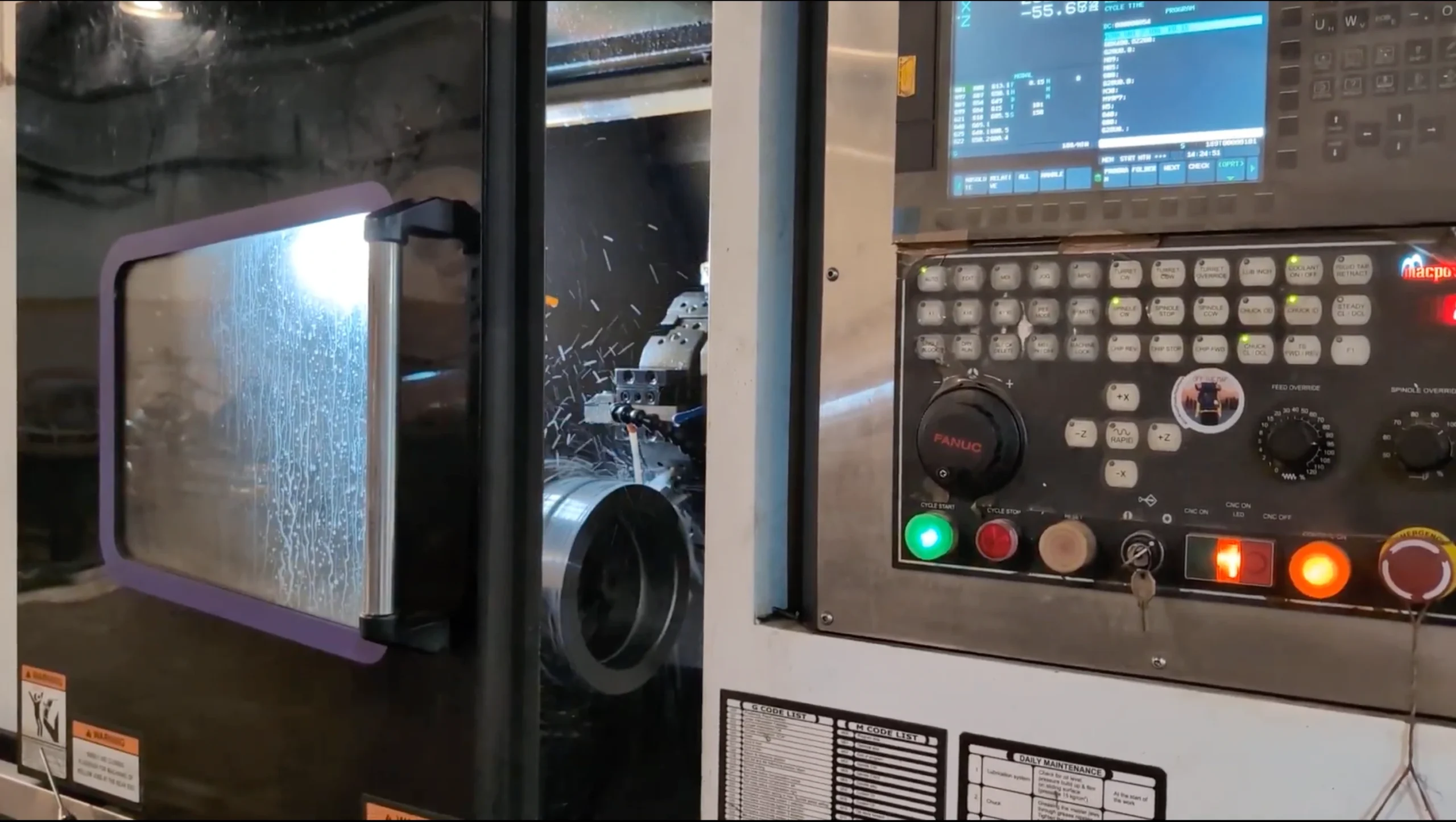
STEP 02
CNC Turning
FANUC Precision CNC Lathe
STEP 03
Vacuum Hardening
In House Vacuum Furnace, to 66 HRC

STEP 04
Bore Grinding
Doimak CNC Internal Grinder
STEP 05
Keyway Wire EDM
Precision keyway cutting, no distortion
STEP 06
Laser Marking
Part No. + batch etched on every blade
Every Blade Inspected. Every Certificate Documented.
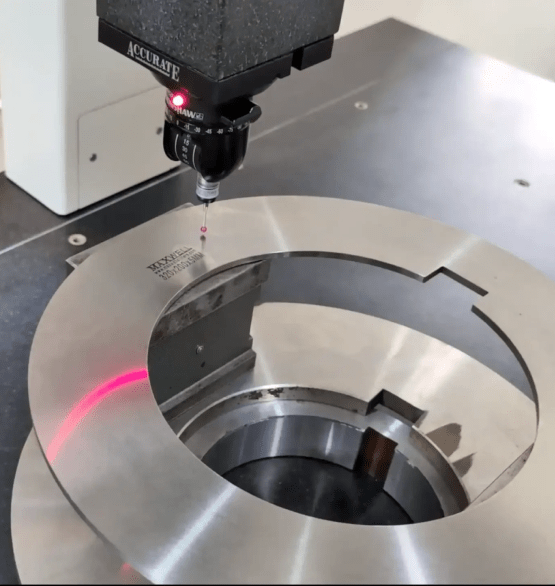
Accurate Spectra CMM (Coordinate Measuring Machine)
Our CMM performs 100% dimensional verification on every blade: OD, ID, thickness, parallelism, concentricity and runout, against your drawing tolerance.
Full inspection suite includes:
▶ Renishaw CMM: OD, ID, thickness, runout per blade
▶ Equotip portable hardness tester: HRC confirmed per blade
▶ Mitutoyo digital micrometers: thickness and flatness
▶ Surface roughness tester: Ra 0.2 μm confirmed post lapping
▶ Granite surface plate: flatness to ±0.001 mm verified
Material test certificates and CMM inspection reports are supplied with every shipment at no additional cost.
Real Results From Real Slitting Lines
Three case studies from Maxwell customers, with the actual problem, the blade change we recommended, and the quantified result. No “improved performance” vagueness
SS Coil Service Center, UAE
CHALLENGE
HSS blades wore out every 6 to 7 days on 304 SS coil. Burr rejection rate: 3.1%. Customer using local D2 blades.
SOLUTION
Switched to Maxwell HSS M35, 64 HRC, single bevel 6° narrow land. Matched top + bottom set.
RESULT ✓
Blade life: 6 days to 17 days (+183%). Burr rejection: 3.1% to 0.3%. Monthly tooling cost down 34%.
Hot Rolling Mill, Rajasthan, India
CHALLENGE
Side trimmer blades chipping within 4 days on 6 mm HR coil. Blade change downtime: 2.5 hrs per event.
SOLUTION
Specified H11 at 52 HRC, radius edge, OD 350 x ID 200 x 25 mm. Supplied matched top/bottom sets + hardened spacers.
RESULT ✓
Blade life: 4 days to 11 days. Chipping: zero in 6 month review. Annual saving: ₹ 18 lakhs in tooling + downtime.
Aluminium Converter, Gujarat, India
CHALLENGE
Top dish blades dishing on 0.8 mm aluminium after 5 days. Edge quality inconsistent across slit widths.
SOLUTION
Converted to D3 at 62 HRC, concave dished geometry, flatness 100% verified ±0.001 mm per CMM.
RESULT ✓
Converted to Maxwell D2 at 62 HRC, concave dished geometry, flatness 100% verified ±0.001 mm per CMM. Top blade dish profile re-specified to match line tension.
Regrinding Service, Extend Blade Life by 3 to 5 Cycles
Send your worn Maxwell or non-Maxwell blades to Rajpura. We regrind, re-lap, re-inspect and ship back to original dimensional tolerance, extending blade life by 3 to 5 full regrind cycles at a fraction of new blade cost.
⏱ Turnaround: 10 working days from receipt of blades
3 to 5x
~40%
10 days
100%
Shipped to 30+ Countries, Quoted in Your Currency
Incoterms & Logistics
- EXW, FOB Mundra/JNPT, CIF, DAP, DDP on request
- Sea: 12 to 18 days to USA, EU, GCC, SE Asia
- Air: 4 to 6 days to USA, EU, UK, GCC
- HS Code: 8208.10 (industrial knives & cutting blades)
Payment Terms
- T/T: 30% advance + 70% against shipping docs
- L/C at sight on confirmed orders
- INR, USD, EUR, GBP invoicing available
- Volume pricing from 25+ blades per line item
Documentation (every shipment)
- Commercial invoice, packing list, certificate of origin
- Mill test certificates + CMM inspection reports
- REACH / RoHS declarations available on request
- CE marking on equipment component supply where applicable
EXCLUSIVE TO MAXWELL CUSTOMERS
Buying blades from Maxwell also gives you access to OptiStack
OptiStack is Maxwell’s slitting line optimisation software, built on 50+ years of production experience. It calculates the optimal blade and spacer arrangement for your daily order book, minimises spacer changes between coils, and tells you exactly what tooling to purchase and what you already have in stock.
Most blade vendors sell metal. We sell uptime.
Frequently Asked Questions
Slitter blades and knives are specialized cutting tools used in slitting machines to precisely cut large rolls of material into narrower strips.
Slitter blades are commonly used in industries like paper, plastic film, metal, textiles, and packaging, these blades ensure clean, accurate cuts with minimal material waste.
Slitting blades are typically manufactured from high-performance materials such as tool steel, high-speed steel (HSS), stainless steel, and tungsten carbide.
Yes, absolutely! At Maxwell Slitter, we specialize in manufacturing custom-sized slitter blades of different shapes and sizes including: rotary, circular and straight machine knives.
They can handle various metals including steel, stainless steel, aluminium, copper, and other industrial alloys.
Slitter blades and slitter knives are often used interchangeably, but slitter blades usually mean rotary circular cutters, while slitter knives may include different industrial cutting tools used in slitting, trimming, and converting machines.
Slitter blades and slitter knives are designed to cut a wide range of materials depending on their material grade and hardness. They are commonly used for slitting materials such as metal sheets, paper, plastic films, foil, rubber, and laminates in industrial slitting and converting machines.
Slitter blades are usually hardened to about 58 to 60 depending on the tool steel used. Proper heat treatment provides wear resistance, longer blade life, and consistent cutting performance in high-speed slitting operations.
Before installing slitter blades, check size, tolerance, flatness, alignment, and mounting surface condition. Ensure blades are clean, undamaged, and properly aligned with the shaft to prevent vibration, poor cutting, and machine wear.
Custom slitter blades offer better fit, tighter tolerance, and longer life because they are made for specific machines and materials. This improves cutting accuracy, reduces burrs, and ensures stable performance in high-speed slitting operations.